How Austrian Regulators Shape Provider Alliances to Influence Game Selection in Mobile Betting Apps
Devon Braun · Aug 24, 2026

How Austrian Regulators Shape Provider Alliances to Influence Game Selection in Mobile Betting Apps
Austrian regulators have established licensing requirements that push betting operators to form specific provider alliances, and these partnerships determine which games appear in mobile betting apps throughout the country. The framework centers on compliance with national gambling statutes administered by the Federal Ministry of Finance, where operators must demonstrate partnerships with approved software providers before receiving or renewing licenses. Data from August 2026 shows that mobile app submissions now include detailed alliance agreements that list every game title along with its certification status.
Regulatory Mechanisms Driving Alliance Formation
Officials require that any operator seeking to offer mobile betting must align with providers who meet technical standards for game fairness and data security, which creates a structured environment where certain alliances become necessary for market entry. These rules emerged from updates to the Austrian Gambling Act that took effect in prior years and continue to evolve with new compliance checkpoints in 2026. Observers note that alliances often involve one local certified provider paired with an international game developer, because regulators verify that local oversight remains in place for all titles offered through apps.
Applications submitted after July 2026 must include evidence of joint testing protocols between alliance members, and regulators review these documents to confirm that game selection prioritizes titles with verified random number generators. This process filters out providers who cannot demonstrate ongoing cooperation, which narrows the pool of available games in approved mobile platforms.
Impact on Game Selection Within Mobile Apps
Once alliances form under regulatory guidance, the resulting game libraries in mobile betting apps reflect approved catalogs rather than operator preference alone. Figures from the Austrian lottery and gaming oversight body indicate that slots and table games from partnered providers account for over 80 percent of titles in active apps during the first half of 2026. Operators report that adding new games now requires alliance members to submit joint documentation, which extends approval timelines but ensures consistent standards across platforms.
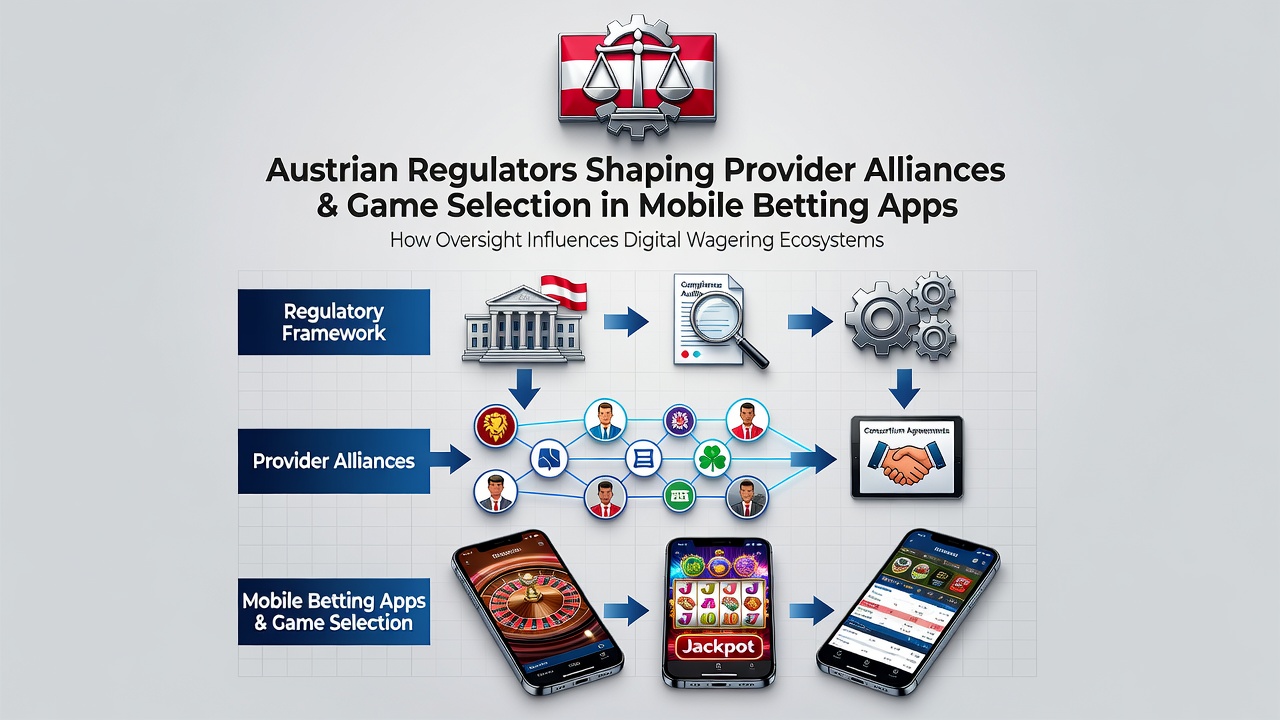
What's interesting is how these alliances influence feature availability, since regulators tie certain game mechanics such as live dealer integration or bonus rounds to specific certified providers. Mobile apps therefore display limited variation in gameplay options until new alliances receive clearance. Research from the Canadian Centre on Substance Use and Addiction on cross-border regulatory models highlights similar patterns where mandated partnerships shape content availability, although Austrian rules place stronger emphasis on local provider involvement.
Alliance Structures and Compliance Requirements
Alliances typically consist of a primary software provider responsible for platform integration and secondary developers who supply individual game titles, with contracts submitted to regulators for review. The process includes background checks on all parties and verification that revenue sharing arrangements comply with tax reporting obligations. In August 2026, authorities introduced additional clauses requiring alliance members to maintain separate audit trails for mobile-specific transactions, which further solidifies the connection between regulatory approval and game selection.
Those who have examined recent licensing decisions note that operators without established alliances face longer review periods or outright rejection when they attempt to introduce unvetted games. This dynamic encourages larger providers to form stable partnerships that cover multiple game categories, thereby shaping the overall market landscape for mobile betting users.
Recent Developments in 2026
August 2026 brought updated guidelines that require alliances to disclose any changes in game algorithms within 30 days, and mobile apps must update their offerings accordingly or risk temporary suspension. These measures build on earlier directives aimed at maintaining transparency in digital gambling environments. Data released by the Austrian Federal Ministry of Finance shows a 15 percent increase in approved alliances compared with the same period in 2025, correlating with expanded game libraries that still remain within regulated boundaries.
Another link appears in reports from the Australian Gambling Research Centre, where analysts compared European licensing models and found that Austria's approach produces more concentrated provider networks than systems relying solely on individual operator certifications. This concentration directly affects which mobile games reach Austrian users and how quickly new titles enter circulation.
Conclusion
Austrian regulatory practices continue to guide provider alliances through licensing conditions and ongoing compliance checks, resulting in structured game selection processes for mobile betting apps. The mechanisms established by the Federal Ministry of Finance ensure that only titles from verified partnerships appear in approved platforms, and developments through August 2026 reinforce this framework. Operators and providers adapt by forming alliances that satisfy documentation and testing requirements, which in turn determines the range of games available to users across the country.